
Sources: NWS Melbourne hail threat levels and Florida Statutes 627.70132 (2026), both checked October 29, 2026.
A hail damage roof inspection is a close look at your shingles, flashing, vents and gutters to find impact marks you can't see from the yard. Hail damage is easy to miss. A roof can look fine from the driveway and still have bruised shingles that start leaking months later. This guide covers what an inspector checks, how hail marks differ from normal wear, what Florida law says about reporting time, and when a roof needs protection right away.
We are a storm response crew based in Winter Haven. We inspect, tarp and stabilize storm-damaged roofs across Central Florida, and you can book a roof inspection with us by phone or through the form on this page.
What's in this guide
- What a hail damage roof inspection checks
- Hail damage or normal wear?
- Does Central Florida get hail that matters?
- Should you get your roof inspected after a hailstorm?
- How long do you have to report hail damage in Florida?
- Why do I keep getting calls about roof inspections?
- What happens during our inspection
- When hail damage is already leaking
- FAQ
What a hail damage roof inspection checks
An inspector looks for a pattern of impacts across the roof and on the metal around it. One mark proves little. A random spread of marks on every slope that faced the storm tells a clear story.
The Insurance Institute for Business & Home Safety (IBHS) lists these signs on an asphalt shingle roof:
- A random pattern of impact marks on the shingles.
- Bruising. Soft spots you can feel when you press on the shingle.
- Cracks or breaks where a hailstone struck.
- Damaged ridge caps. IBHS calls them especially vulnerable on a shingle roof.
The inspector also checks for proof that hail fell at all. IBHS calls this collateral evidence: dents or spatter marks on gutters, downspouts, metal flashing and A/C units. A dented downspout next to a roof full of marks is strong evidence. A clean downspout next to a few odd marks is a reason to look harder at other causes.
Granules matter too. The trade group InterNACHI explains that hail doesn't crush the granules on a shingle. It knocks them off the sides of the impact and pushes them toward the center. Marks that don't fit that pattern, or that sit in neat rows near the middle of each tab, point to something other than hail.
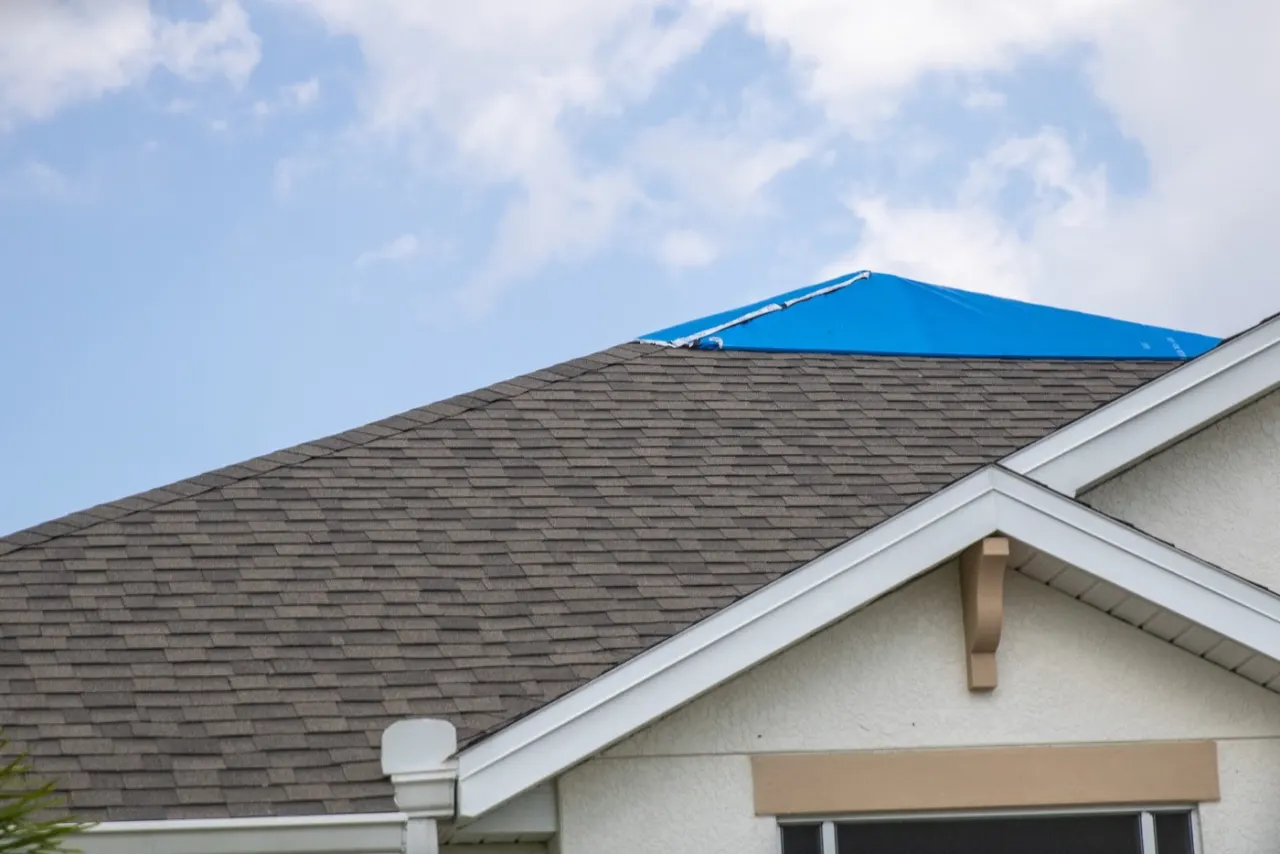
Hail damage or normal wear?
Plenty of things look like hail from a ladder. This is the part of an inspection that takes judgment, and it is why photos matter. Here is how the common marks compare, based on the IBHS and InterNACHI guidance above.
| What you see | Points to hail when | Points to something else when |
|---|---|---|
| Missing granules | Spots are round, random, and the granules are pushed toward the center | Loss runs along shingle edges, which IBHS calls normal weathering, or heavy rain washed them off |
| Soft spots | They sit under impact marks and feel bruised when pressed | The whole roof is soft or blistered from age |
| Marks on shingles | Random across every slope that faced the storm, including tab edges | Grouped in clusters or one per tab near the middle, which can mean tool or man-made marks |
| Dents on metal | Gutters, downspouts, flashing or A/C fins are dented | No metal on the property shows any dents |
| Discoloration | It lines up with fresh impact marks | It is even across the roof, or tied to a manufacturing defect |
Does Central Florida get hail that matters?
It does. Florida's thunderstorms can drop hail, and the National Weather Service office in Melbourne, which covers Orlando and the counties around it, publishes hail threat levels for its area. The NWS calls hail severe at 1 inch across, about the size of a quarter. Large hail runs from 1 inch to 1 3/4 inches, golf ball size.
Smaller hail can still do harm over time. In 2025, IBHS tested shingles against hailstones under 1 inch, then let them weather for a year. As Insurance Journal reported on October 2, 2025, the small hits stripped more granules in total than a single 2-inch stone. The weathered, hit shingles were about ten times more likely to be damaged by a later severe hailstorm.
So a storm that "only" dropped pea-sized hail is still worth a look if your roof is older.
Should you get your roof inspected after a hailstorm?
Yes, if you see signs that hail hit your property. You can check for them safely from the ground. Please don't climb onto a wet or damaged roof to look.
- Walk the house and look at gutters and downspouts for new dents.
- Check the fins on your A/C condenser and any metal vents you can see.
- Look for piles of shingle granules at the bottom of downspouts.
- Look for shingle pieces or broken ridge caps in the yard.
- Check ceilings and the attic, if you can get in safely, for new stains.
If you find any of these, book an inspection soon. Damage left open gets worse with every rain, and after a big storm, inspection calendars fill fast. Write down the date of the storm too. You will want it later.
How long do you have to report hail damage in Florida?
Florida sets the time limit in section 627.70132 of the Florida Statutes. Under the 2026 statutes, notice of a property insurance claim, or a reopened claim, must reach the insurer within 1 year after the date of loss. A supplemental claim, for added damage from the same event on a claim already adjusted, has 18 months.
For weather events such as windstorms and severe storms, the statute sets the date of loss as the date the event was verified by the National Oceanic and Atmospheric Administration (NOAA). NOAA keeps a public record of reported storms in its Storm Events Database, so you can look up when hail was reported near you.
That is what the law says. How it applies to your policy is a question for your insurance company or a licensed professional. We are not adjusters, and we don't advise on claims or coverage. What we can give you is a dated set of photos of what is on your roof.
Why do I keep getting calls about roof inspections?
After a storm, some contractors knock on doors, call and leave flyers looking for roof work. Florida regulates this in section 489.147 of the Florida Statutes. A contractor's flyer, door hanger, card or email that urges you to make a roof damage claim must state that you owe your deductible and that waiving a deductible or filing a false claim is insurance fraud. A contractor also can't offer you a rebate, gift, cash or deductible waiver in exchange for inspecting your roof or making a claim.
Fines run up to $10,000 per violation.
So if a caller offers to cover your deductible, or a gift card for letting them on your roof, section 489.147 bars that kind of offer. You can check any Florida contractor's license on the state's license search.
What happens during our inspection
Our roof inspection is straightforward. We come out, get on the roof safely and examine the shingles, flashing, penetrations and ridge lines. We look for impact evidence that is invisible from the ground.
Then we photograph everything we find.
You get the timestamped photos whether or not you hire us for anything. If the roof came through fine, we say so. If there is damage, we show you where it is and explain your options.
Some damage needs a targeted emergency repair, some needs a tarp while you plan the next step, and some is worth documenting now and watching. The decisions stay yours.
When hail damage is already leaking
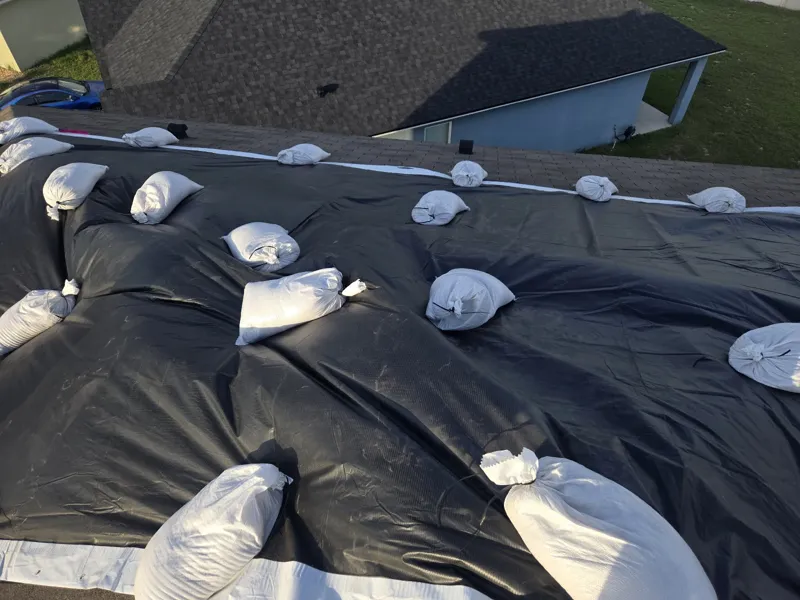
If water is already coming in, skip the inspection queue and call (863) 204-2088. Our line is answered 24/7. An active leak needs emergency roof tarping or a temporary dry-in first. In Florida, a few more afternoon storms can push water into insulation and drywall fast.
We cover Polk County from our base in Winter Haven, including Lakeland, Auburndale, Bartow, Haines City and Lake Wales. We also work in Kissimmee, Orlando and Tampa. See every town on our service areas page.
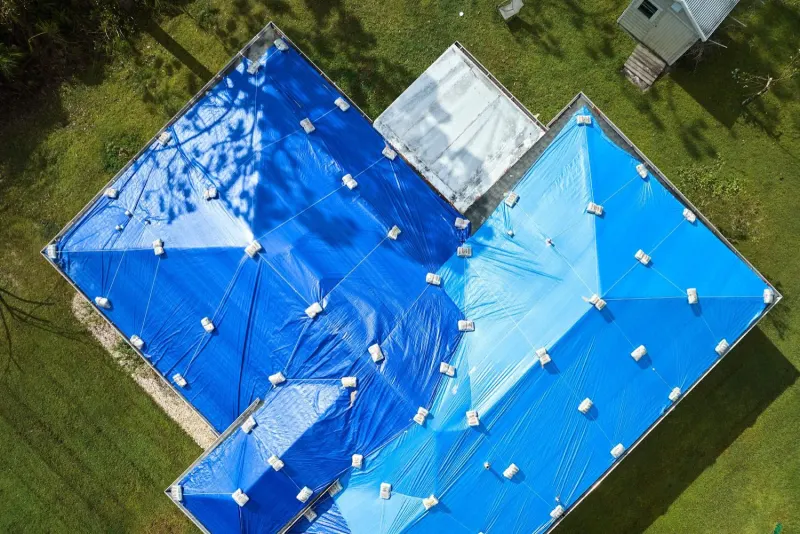
Not sure what your roof needs after a hailstorm? Book a roof inspection or send the form on this page, and we will call you back.
Hail damage roof inspection FAQ
How long does a hail damage roof inspection take?
For a normal home, our inspection usually takes well under an hour on the roof, plus a few minutes to walk you through the photos. Larger or more complex roofs take longer.
Do I need to be home for a roof inspection?
Not for the roof itself, as long as we can get to it safely. Most people like to be there for the photo walkthrough at the end, and some damage, like a ceiling stain, is easier to trace with someone inside.
Can you see hail damage from the ground?
Usually not on the shingles. From the ground you can check for the signs that hail fell: new dents on gutters, downspouts and A/C fins, and piles of granules at downspout outlets. If you see those, have the roof itself looked at.
Is granule loss always a sign of hail damage?
No. IBHS notes that granules wear off shingle edges with normal weathering and can be knocked loose by heavy rain. Hail tends to leave round, random marks where the granules are pushed toward the center of the hit.
Does hail damage always cause a leak right away?
No. Bruised or cracked shingles can hold for a while and then leak months later. IBHS research found that even small hail can strip granules and leave a roof more likely to be damaged by the next severe storm.
How long do I have to report hail damage in Florida?
Florida Statutes 627.70132 says notice of a new or reopened property insurance claim must be given within 1 year after the date of loss, and a supplemental claim within 18 months. Your insurer can tell you how that applies to your policy.