
Sources: Citizens Property Insurance policy change summary and the U.S. Army Corps of Engineers Blue Roof announcement for Hurricane Milton, checked November 6, 2026.
Emergency roof tarping cost comes down to three things: how big the damaged area is, how steep and high the roof is, and how the tarp has to be anchored to hold. That is why we quote every job before any work starts, usually over the phone. For most Florida homeowners, the bigger question is who ends up paying, because a tarp after storm damage is the kind of protective step homeowners policies expect you to take. This guide covers what changes the price, what insurance and Florida's free federal program do and don't pay for, and what water costs if the roof stays open.
We are a storm response crew based in Winter Haven. Emergency roof tarping is the whole business, and our line is answered 24/7 at (863) 204-2088.
What's in this guide
- What sets the price of an emergency tarp
- A tarp against what water costs
- Does insurance pay for emergency tarping?
- Operation Blue Roof: the free option, and its limits
- What a do-it-yourself tarp really costs
- How we quote a tarp job
- FAQ
What sets the price of an emergency tarp?
A tarp job is labor, height and hardware more than it is plastic. These are the things that move the number, and they are the questions we ask on the phone.
| Factor | Why it changes the price |
|---|---|
| Size of the damaged area | A few missing shingles over one room takes one tarp. A peeled-back section or a whole slope takes large-format material in overlapped pieces and more anchoring. |
| Pitch and height | A steep or two-story roof takes more safety setup and more time on the roof than a low ranch roof. |
| Roof material | Shingle roofs are the most straightforward. Tile, metal and flat or low-slope roofs need different securing methods so the tarp doesn't crack tiles or put new holes in a membrane. |
| How long it has to hold | A tarp that bridges a week until a roofer arrives is built differently from one that has to last months while a claim or a re-roof is pending. |
| What is on the roof | A tree limb or heavy debris has to come off before any tarp goes on, and that removal is usually separate work. |
| Timing | After a named storm, every crew in the region is booked at once. The price of the tarp is only part of it. The wait is the other part. |
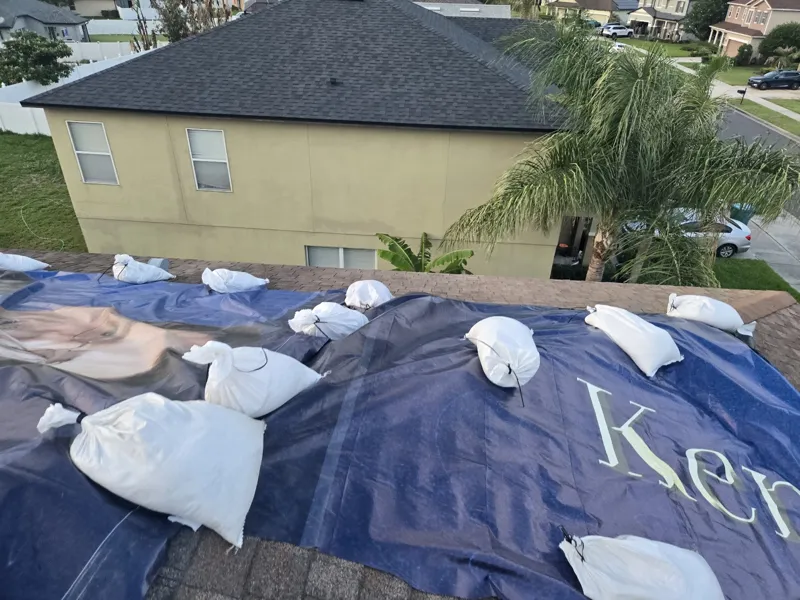
We size the tarp to the damage rather than draping the whole roof by default, batten the edges and place anchoring where it won't create a new leak path. That is how our installs are built to hold through the next squall line, and it is also why a tarp quote depends on seeing or hearing exactly what is damaged.
A tarp against what water costs
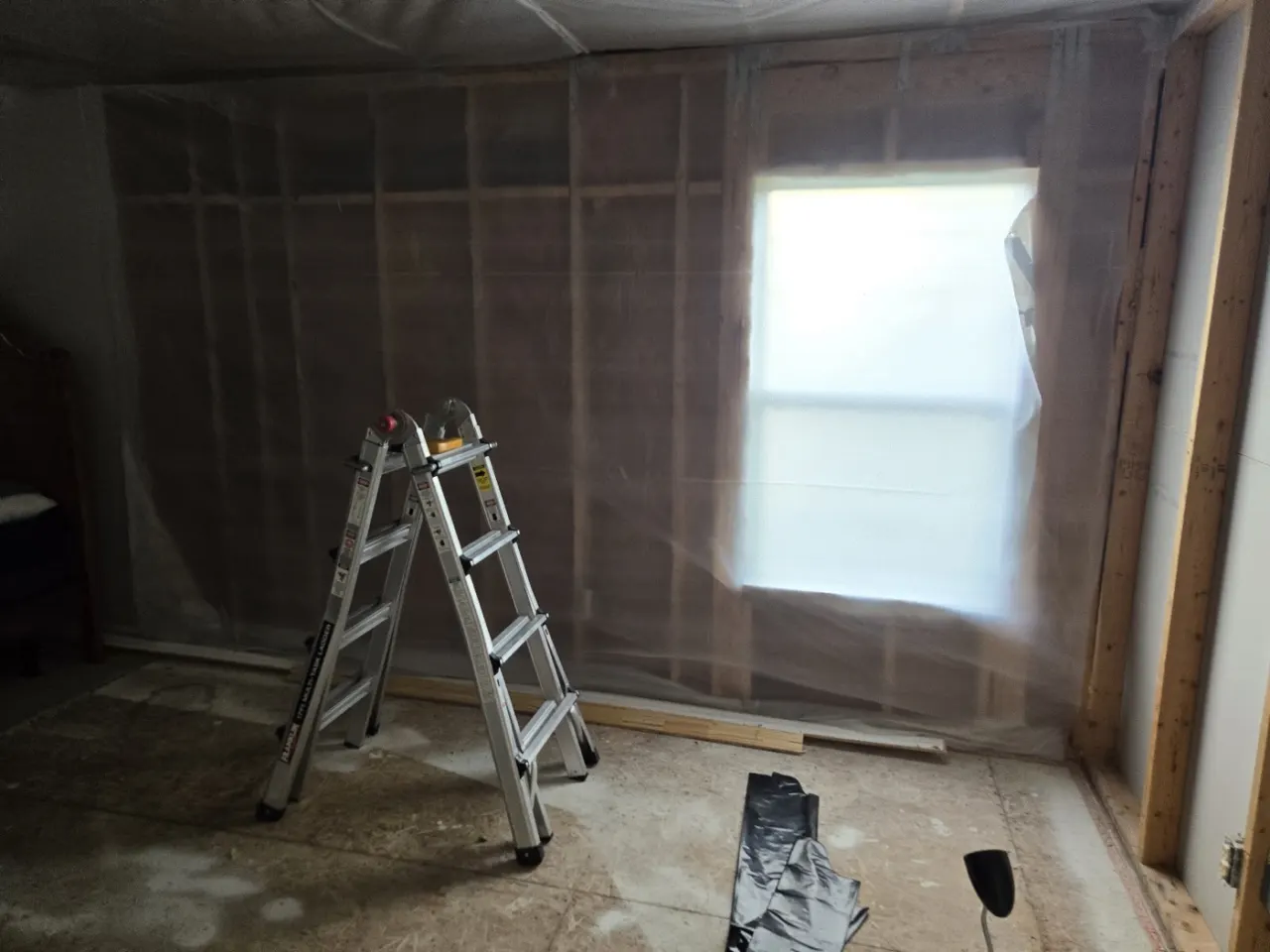
The tarp is rarely the expensive part of a storm-damaged roof. A roof opening that costs a few hundred dollars to tarp today can turn into tens of thousands of dollars of interior damage by the weekend. Water that gets past the roof deck soaks insulation, drywall and flooring, and Florida humidity can start mold growth in wet materials within a day or two.
Central Florida's afternoon thunderstorms make the math worse. An open roof in Polk County doesn't wait for the next hurricane to take on water; it takes it the next afternoon. That is why the cheapest decision after storm damage is almost always getting the roof covered quickly, even if the permanent repair waits weeks.
Does insurance pay for emergency tarping?
Often it does, as part of a covered loss, but your policy decides, and we are not adjusters. Homeowners policies generally expect you to take reasonable steps to protect the property from further damage after a loss, and many homeowners submit the tarp as part of their storm damage claim.
Florida's state-backed insurer is a useful example of how that is written. Since July 1, 2016, Citizens Property Insurance's homeowners forms require policyholders to take emergency measures to protect the property from further damage after a covered loss. Those "reasonable emergency measures" are limited to the greater of $3,000 or 1 percent of the Coverage A (dwelling) limit, unless Citizens approves more in advance. The same summary says there may be no coverage for permanent repairs that begin before 72 hours after the loss is reported, before Citizens inspects, or before it approves them, which is one more reason the first step is a tarp, not a new roof.
Other insurers write their own terms, so read your policy or ask your agent. Three habits help whichever company you have:
- Photograph before anything is touched. We photograph the damage as found and again after the tarp is on, and you keep the photos.
- Keep the invoice and receipts. Florida's Chief Financial Officer told storm victims after Hurricane Milton to keep receipts for emergency fixes, as WPTV reported on October 11, 2024.
- Call your insurer early. The same report carried his warning not to sign anything a door-to-door contractor hands you before you talk to your insurance company.
Your hurricane deductible may be higher than your other deductible, so a tarp bill can fall under it. That is between you and your policy. What we can do is give you a clean, dated record of the work.
Operation Blue Roof: the free option, and its limits
After some federally declared hurricanes, the U.S. Army Corps of Engineers runs Operation Blue Roof for FEMA, and the tarp is free to the homeowner. After Hurricane Milton, the Corps announced the program on October 15, 2024 for 22 Florida counties, Polk, Hillsborough, Orange, Manatee and Sarasota among them. It is worth knowing about, and worth knowing what it doesn't cover:
- It only runs when activated. No declared hurricane, no program. A June thunderstorm or a fallen oak limb doesn't qualify.
- You sign up and wait. Homeowners submit a Right of Entry form online, by phone or at a collection center. The Milton sign-up window was 21 days, and crews work through the list.
- Primary homes only. Primary residences and permanently occupied rentals with less than 50% structural damage qualify. Vacation rentals don't.
- Shingle roofs, mostly. The roof has to be shingle or a similar material the tarp can be nailed to. Flat roofs and metal, clay, slate or asbestos tile roofs don't qualify; metal roofs and mobile homes are reviewed case by case.
- Debris is on you. Large debris such as a fallen tree has to be removed by the homeowner first.
If your roof qualifies and you can wait, sign up. If water is coming in tonight, or your roof is tile, metal or flat, a paid tarp is what keeps the inside of the house dry in the meantime.
What a do-it-yourself tarp really costs
A hardware-store tarp, a few boards and a box of screws cost less than a professional install. The real costs are elsewhere. Falls are the leading cause of death in construction, according to OSHA's fall prevention campaign, which counts 389 fatal falls to a lower level among 1,034 construction deaths in 2024, and those are trained workers. A wet, storm-damaged roof is a worse place to learn.
The other cost is a tarp that doesn't hold. A tarp that is draped instead of anchored flogs itself loose in the next 40 mph gust and lets water right back in, and fasteners driven through the wrong spot become new leaks. If you do go up, do it on a low, dry roof with a helper, and see our guide on how to repair a leaking roof for the temporary fixes that hold.
How we quote a tarp job
Call (863) 204-2088 and a person answers. We ask what happened, roughly how big the damaged area is, what the roof is made of and how high it is. Photos help if you can take them safely from the ground. In most cases you have the number over the phone, and you always have it before work starts.
On site, we photograph the damage as found, fit and anchor the tarp, and photograph it again when we are done. If the roof needs a targeted emergency roof repair instead of a tarp, or nothing at all, we tell you so. After a major storm we work calls in the order they come in and give you an honest place in line.
We work from Winter Haven across Polk County, including Lakeland, Bartow, Haines City and Lake Wales, up the I-4 corridor to Orlando and out to Tampa and Sarasota. For a straight number on your emergency roof tarping cost, start with our 24/7 emergency roof tarping service.
FAQ
How much does emergency roof tarping cost?
It depends on the size of the damaged area, the roof pitch and height, the roof material and how the tarp has to be anchored to hold. We quote every job before work starts, over the phone in most cases.
Does homeowners insurance pay for an emergency roof tarp?
Often, as part of a covered loss, but your policy decides. Policies generally expect you to take reasonable steps to prevent further damage. Citizens, for example, limits reasonable emergency measures to the greater of $3,000 or 1 percent of the Coverage A limit unless it approves more in advance.
Can I get my roof tarped for free in Florida?
After some declared hurricanes, the U.S. Army Corps of Engineers runs Operation Blue Roof, which tarps eligible shingle roofs on primary homes at no cost. It only runs when activated, you sign up and wait your turn, and flat, metal and tile roofs generally don't qualify.
Why does a tarp on a tile or metal roof cost more?
Tile cracks under foot and under fasteners, and metal and flat roofs need different securing methods so the tarp doesn't create new leaks. That takes more time and care than a tarp on shingles.
Is it cheaper to tarp the roof myself?
The materials cost less than a professional install, but a fall from a roof is the real risk, and a tarp that isn't anchored properly blows loose in the next storm and lets water back in. Do it yourself only on a low, dry roof with a helper.
How fast can you tarp my roof?
Call and we give you a real arrival window based on where you are and what is already in the queue. In normal weather that is often the same day. After a major storm we work calls in the order they come in.