
Sources: Insurance Information Institute, FloodSmart (NFIP) and the 2026 Florida Statutes, checked November 6, 2026.
Does homeowners insurance cover storm damage? Usually the wind part, yes. Standard homeowners forms list windstorm and hail as covered perils, so shingles torn off by wind or a roof punctured by hail generally fall under the policy. Flood generally doesn't: rising water needs its own flood policy.
In Florida, a hurricane brings its own deductible, a one-year clock to report the loss, and a duty to protect the house from further damage. This guide lays out what the public rules say, so you know what to ask your insurer.
One thing first. We are a storm response crew, not adjusters, and Florida law doesn't let a contractor interpret your policy or advise you on coverage. What follows is general information with its sources. Your policy and your insurance company decide your claim.
What's in this guide
- What storm damage is usually covered
- Rain damage inside: the opening rule
- Wind versus flood
- Florida's hurricane deductible
- Your duty to protect the house
- What to do after storm damage, in order
- Contractors, door knockers and your claim
- Where to get help with a claim
- FAQ
What storm damage is usually covered?
The Insurance Information Institute's coverage table lists "windstorm or hail" as a covered peril on every standard homeowners form it shows, HO-1 through HO-8. In practice, that is the damage storms do most often to a Central Florida roof:
- Shingles lifted, creased or torn off by wind.
- Hail bruises and punctures (our hail damage roof inspection guide shows what those look like).
- A limb or debris driven into the roof by the storm.
- Flashing and ridge caps peeled back by gusts.
Coverage still depends on your policy's wording, your deductible and the condition of the roof before the storm. Older roofs bring their own Florida rules on insurability, which our guide to roof inspection cost covers.
Rain damage inside: the opening rule
Water through the ceiling is where most storm claims get complicated. Many homeowners policies carry a clause like the one quoted by the Merlin Law Group's property insurance blog (November 16, 2018): the insurer doesn't cover loss caused by rain to the interior of a building unless a covered peril first makes an opening in the roof or an outside wall, door or window that the rain comes through.
That is why the order of events matters, and why documentation matters even more. Photos of the opening on the roof, taken before anyone covers it, show where the water came in. When we tarp a roof, we photograph the damage as found and again after the tarp is on, and you keep every photo.
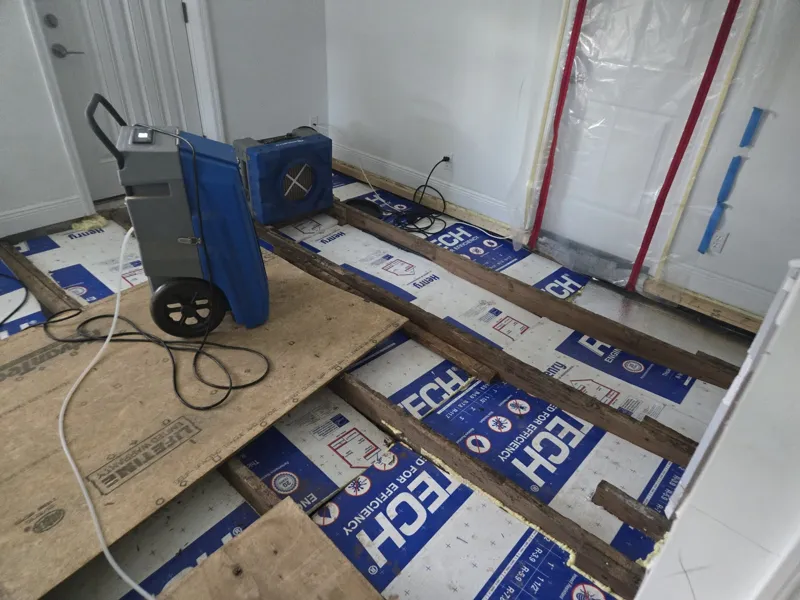
Wind versus flood
"Most homeowners insurance does not cover flood damage," as the National Flood Insurance Program's FloodSmart site puts it, and the Insurance Information Institute says the same of standard homeowners policies. Flood coverage comes from the NFIP or a private flood policy.
A hurricane can do both kinds of damage to the same house: wind takes part of the roof while water rises outside. Those can be two different claims under two different policies, with two deductibles. If you have both, tell both insurers what happened, and keep the photos separate: roof and ceiling damage in one set, rising-water damage in the other.
Florida's hurricane deductible
A Florida homeowners policy can carry a separate deductible for hurricane losses, often larger than the regular one. Under section 627.701 of the 2026 Florida Statutes, insurers must offer hurricane deductibles of $500 or 2%, 5% or 10% of the policy's dwelling limit, and the hurricane deductible applies on an annual basis to hurricane losses in a calendar year.
| Rule | What it says | Source |
|---|---|---|
| Deductible options | $500, or 2%, 5% or 10% of the dwelling limit | Fla. Stat. s. 627.701(3)(a) |
| Calendar-year deductible | Applies once per calendar year to covered hurricane losses; a later hurricane may face only the remaining amount or the regular deductible, whichever is greater | Fla. Stat. s. 627.701(5)(a) |
| When a "hurricane" loss starts | When a hurricane warning is issued for any part of Florida | Fla. Stat. s. 627.4025(2)(c) |
| When it ends | 72 hours after the last hurricane watch or warning for any part of Florida ends | Fla. Stat. s. 627.4025(2)(c) |
So the same torn shingles can fall under your hurricane deductible after a named storm and under your regular deductible after a summer thunderstorm. The arithmetic adds up fast: on a $300,000 dwelling limit, a 2% hurricane deductible is $6,000. That is worth knowing before a storm, not after. Your declarations page shows which you have.
Your duty to protect the house
Homeowners policies generally expect you to take reasonable steps to prevent further damage after a loss. Florida's state-backed insurer shows how that is written. Citizens Property Insurance's homeowners forms (in force since July 1, 2016) require policyholders to take emergency measures to protect the property from further damage. Those measures are limited to the greater of $3,000 or 1 percent of the Coverage A limit unless Citizens approves more in advance, and there may be no coverage for permanent repairs begun before 72 hours after the loss is reported, before Citizens inspects, or before it approves them.
Other insurers set their own terms. The pattern is the same, though: cover the opening now, keep the receipts, and hold the permanent repair until your insurer has had its look. Our guide to emergency roof tarping cost covers what that first step usually involves.
What to do after storm damage, in order
- Stay safe. Keep out from under a sagging ceiling, and turn off power to wet areas at the breaker if you can do it safely.
- Photograph everything first. The roof from the ground, the ceiling, the wet floor, damaged belongings, with dates.
- Stop more water getting in. A tarp over the opening, buckets and towels inside. If the roof isn't safe to climb, get a crew to do it.
- Report the claim. Florida gives you 1 year from the date of loss to give notice of a property insurance claim under section 627.70132. Sooner is better: the evidence is fresher and the water damage is smaller.
- Keep every receipt. Tarps, emergency services, drying equipment and anything else you paid to protect the house.
- Wait for the insurer before permanent repairs, unless they approve otherwise.
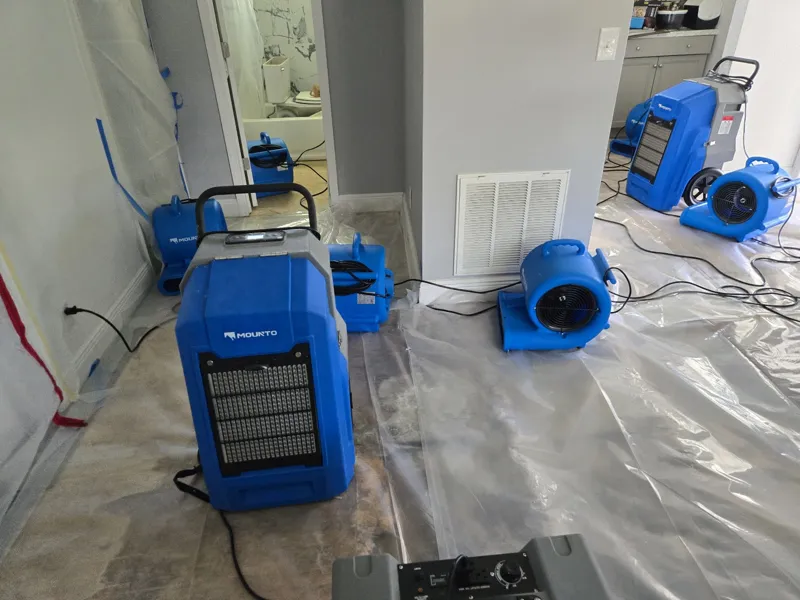
Contractors, door knockers and your claim
After a storm, contractors show up at the door. Florida has tightened the rules around them:
- No assigning your claim. For residential property policies issued on or after January 1, 2023, a policyholder may not assign post-loss insurance benefits, in whole or in part, under section 627.7152(13).
- No inducements, no coverage advice. Under section 489.147, a contractor can't offer you a rebate, gift or deductible waiver for an inspection or a claim, and can't interpret your policy, advise you on coverage or adjust the claim without a public adjuster license.
- Talk to your insurer before you sign. After Hurricane Milton, Florida's Chief Financial Officer told storm victims "do not sign anything" a stranger hands them and to contact their insurer first, as WPTV reported on October 11, 2024.
You can check any Florida contractor's license on the state's DBPR license search.
Where to get help with a claim
Your agent and your insurance company are the first call on what your policy covers. If a claim stalls, the Florida Department of Financial Services' Division of Consumer Services takes insurance questions from consumers and runs a mediation program for property claims.
Our part is the first night. Call (863) 204-2088, any hour, and we get the opening covered, photograph the damage before and after, and hand you the photos for whatever comes next. We work from Winter Haven across Polk County, including Lakeland, Bartow, Haines City and Polk City, and out to Orlando, Tampa and Lutz. Whatever homeowners insurance ends up covering for your storm damage, the claim goes better when the roof was covered fast; start with our 24/7 emergency roof tarping service.
FAQ
Does homeowners insurance cover storm damage to a roof?
Wind and hail are listed as covered perils on standard homeowners forms, so roof damage from them is generally covered, subject to your policy's wording and deductible. Your policy and your insurer decide the claim.
Does homeowners insurance cover flood damage from a hurricane?
Generally not. FloodSmart, the federal flood insurance program's site, says most homeowners insurance does not cover flood damage. Flood coverage comes from the NFIP or a private flood policy.
Is rain damage inside my house covered after a storm?
Many policies cover rain damage inside only when a covered peril, such as wind, first made an opening in the roof or walls that the rain came through. Photos of that opening, taken before it is covered, matter.
How long do I have to file a storm damage claim in Florida?
Under section 627.70132 of the Florida Statutes, notice of a property insurance claim must be given within 1 year after the date of loss. A supplemental claim has 18 months.
What is a hurricane deductible in Florida?
A separate deductible for hurricane losses. Florida insurers must offer $500 or 2%, 5% or 10% of the dwelling limit, and it applies once per calendar year to covered hurricane losses.
Will my insurance pay to tarp my roof?
Policies generally expect you to protect the house from further damage after a covered loss, and emergency measures are commonly part of the claim. Citizens, for example, limits them to the greater of $3,000 or 1 percent of Coverage A unless it approves more in advance.